Skip to content
Members login
Job board
Forestry Placements
Join today
  • Centenary
  • Who We Are
    • Our Purpose
    • Our History
    • Our People
      • Our Team
      • Our Governance
    • Our Members
    • Our Member Networks
    • Special Interest Groups
    • Armed Forces Covenant
  • What We Do
    • Education & Careers
    • Educational & Scientific Trust
    • Emerging Leader Programme
    • ICF Mentoring Programme
    • Find a Tree Consultant
    • Professional Standards
      • Code of Conduct
      • Make a Complaint
    • Publications
      • TREES magazine
      • Forestry: An International Journal of Forest Research
    • ICF Awards
      • ICF Student Award
      • Professional Forester of the Year Award
      • The Institute’s Medal
    • Virtual Forestry Work Experience
    • Young Professional Foresters’ Exchange Programme
    • Level 4 Forestry Works Manager
    • Forestry Sector Skills Plan
  • Membership
    • Journey Planner
    • Join Us
    • Competency Framework
    • Technical Membership
    • Get Chartered
    • PME Guidance Videos
    • Fellowship
    • Code of Conduct
    • CPD Requirements
    • Member Stories
    • Chartered Environmentalist
  • Events
  • Policy
    • Our Priorities
    • Recent Developments
    • Representing the Institute
    • Consultations & Position Papers
  • News & Blogs
  • Contact Us
  • Centenary
  • Who We Are
    • Our Purpose
    • Our History
    • Our People
      • Our Team
      • Our Governance
    • Our Members
    • Our Member Networks
    • Special Interest Groups
    • Armed Forces Covenant
  • What We Do
    • Education & Careers
    • Educational & Scientific Trust
    • Emerging Leader Programme
    • ICF Mentoring Programme
    • Find a Tree Consultant
    • Professional Standards
      • Code of Conduct
      • Make a Complaint
    • Publications
      • TREES magazine
      • Forestry: An International Journal of Forest Research
    • ICF Awards
      • ICF Student Award
      • Professional Forester of the Year Award
      • The Institute’s Medal
    • Virtual Forestry Work Experience
    • Young Professional Foresters’ Exchange Programme
    • Level 4 Forestry Works Manager
    • Forestry Sector Skills Plan
  • Membership
    • Journey Planner
    • Join Us
    • Competency Framework
    • Technical Membership
    • Get Chartered
    • PME Guidance Videos
    • Fellowship
    • Code of Conduct
    • CPD Requirements
    • Member Stories
    • Chartered Environmentalist
  • Events
  • Policy
    • Our Priorities
    • Recent Developments
    • Representing the Institute
    • Consultations & Position Papers
  • News & Blogs
  • Contact Us
Home > News & Blogs > Laying the Groundwork for Managing Ash Dieback in Scotland

Laying the Groundwork for Managing Ash Dieback in Scotland

  • February 24, 2020

Jonathan Callis MICFor, Senior Asset Engineer at Network Rail, attended Scotland’s Ash Dieback Risk Group meeting, coordinated by Scottish Forestry, last month in Edinburgh.

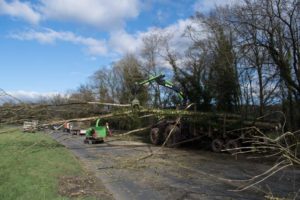
With the help of a newly formed Ash Dieback Risk Group, Scotland is gearing up to deal with a significant increase in damage likely to arise from ash dieback over the coming years, the brunt of which is likely to be felt by local authorities and those responsible for the safety of transport networks, utilities, buildings and areas with high public access.

The Group, which brings together expertise from local authorities and the forestry, transport, utilities and nature conservation sectors, will play a key role in helping to develop policies on ash dieback for the Scottish Government. The Tree Council has been commissioned by Scottish Forestry to assist in this process following the Council’s extensive experience in creating an Action Plan ‘Toolkit’ – and associated guidance – for England and Wales.

Ash dieback, caused by the fungus Hymenoscyphus Fraxineus (more commonly known as ‘Chalara’), is likely to be the most significant tree health issue affecting the UK since Dutch elm disease. First detected in England and Scotland in 2012, damage levels in England, even on older ash trees, have escalated significantly over the last two to three years. That trend is now starting to emerge in Scotland and is likely to lead to the decline or death of the majority of its 11 million mature ash trees over the next decade and create significant liabilities and costs for those who own or manage land.

A recent report from Oxford University indicated that the cumulative cost of the disease to the UK will be in the order of £15 billion over the next 100 years, half of which will arise in the next decade. About two-thirds of those costs relate to the loss of ‘ecosystem services’ such as carbon capture, water quality and air purification, and the remainder relates mainly to landowners having to deal with dangerous trees next to roads, railways, electricity
lines, buildings and areas of high public access.

Developing an Action Plan Toolkit tailored to Scotland’s needs is one of the key purposes of the Ash Dieback Risk Group (Scotland). By providing guidance on awareness raising, planning, responses and recovery actions, the Toolkit will provide essential guidance for all those in the private and public sectors who share the collective responsibility for dealing with ash dieback in Scotland.

For further information, you can contact tree.health@forestry.gov.scot

Categories
Latest
  • Halfway update from Fergus Simister on forestry exchange in Tasmania
  • Institute looks forward to working with the new UK Government
  • Forestry policy & CPD roundup April – June 2026
  • New programme opens to support Forestry Works Managers achieve recognised qualifications
  • Institute responds to the latest woodland creation statistics

Latest news

Halfway update from Fergus Simister on forestry exchange in Tasmania

Fergus Simister (Assistant Harvesting Manager at James Jones & Sons Ltd) is one of two candidates selected for the Young Professional Foresters’ Exchange Programme 2026

Read story

Institute looks forward to working with the new UK Government

The Institute of Chartered Foresters congratulates Andy Burnham on his appointment as Prime Minister and Dame Angela Eagle DBE on her appointment as Secretary of

Read story

Forestry policy & CPD roundup April – June 2026

Welcome to the Institute’s policy update focusing on key developments shaping forestry and land use policy, upcoming consultations, CPD events, and opportunities for member engagement.

Read story
  • Privacy Policy
  • Cookie Policy
  • Terms & Conditions
  • Contact Us
  • Privacy Policy
  • Cookie Policy
  • Terms & Conditions
  • Contact Us
ICF Head Office

Scott House (Mull Office 6th Floor), 10 South St. Andrew Street, Edinburgh, EH2 2AZ
+44 (0)131 240 1425

ICF Bristol Office

Brunswick Court, Brunswick Square, Bristol, BS2 8PE

X-twitter Linkedin Instagram Facebook

icf@charteredforesters.org

Registered Charity SC016033. © 2026 Institute of Chartered Foresters. All Rights Reserved

Website by 39steps

Members login

Join today